

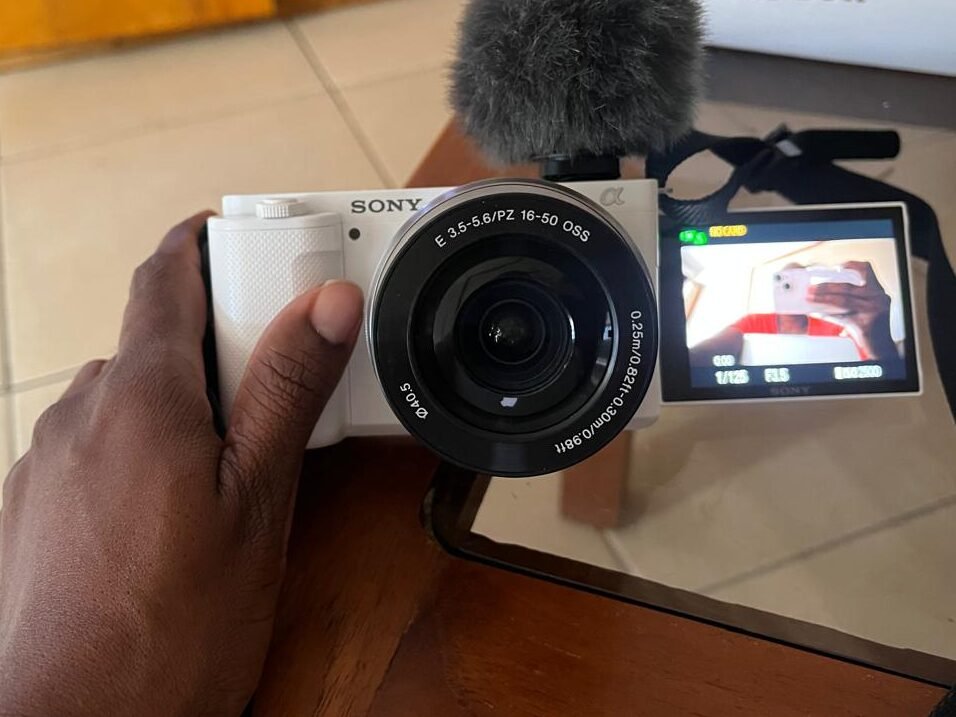
The One-Sentence Verdict: If you want to start your interchangeable lens camera journey without breaking the bank, and don’t mind carrying dedicated video equipment, the Sony ZV-E10 remains a solid entry point into serious content creation in 2026.
Who This Review Is For
You’re a content creator who’s outgrown your smartphone’s limitations. You’re filming vertical shorts for TikTok and Instagram, but also want the flexibility to create long-form YouTube content. You need a camera that produces professional 4K footage without requiring a film degree to operate. You’re ready to invest in dedicated video equipment but aren’t ready to drop $2,000+ on a setup.
My Real-World Use
I use the Sony ZV-E10 for:
- Vertical short-form content – TikTok, Instagram Reels, YouTube Shorts
- Long-form YouTube videos – tutorials, reviews, vlogs
- The phone-free workflow – no more airplane mode interruptions or storage anxiety
- Baseline 4K content – clean, sharp footage with the kit lens
- Face-tracking content – interviews, talking-head videos, product reviews
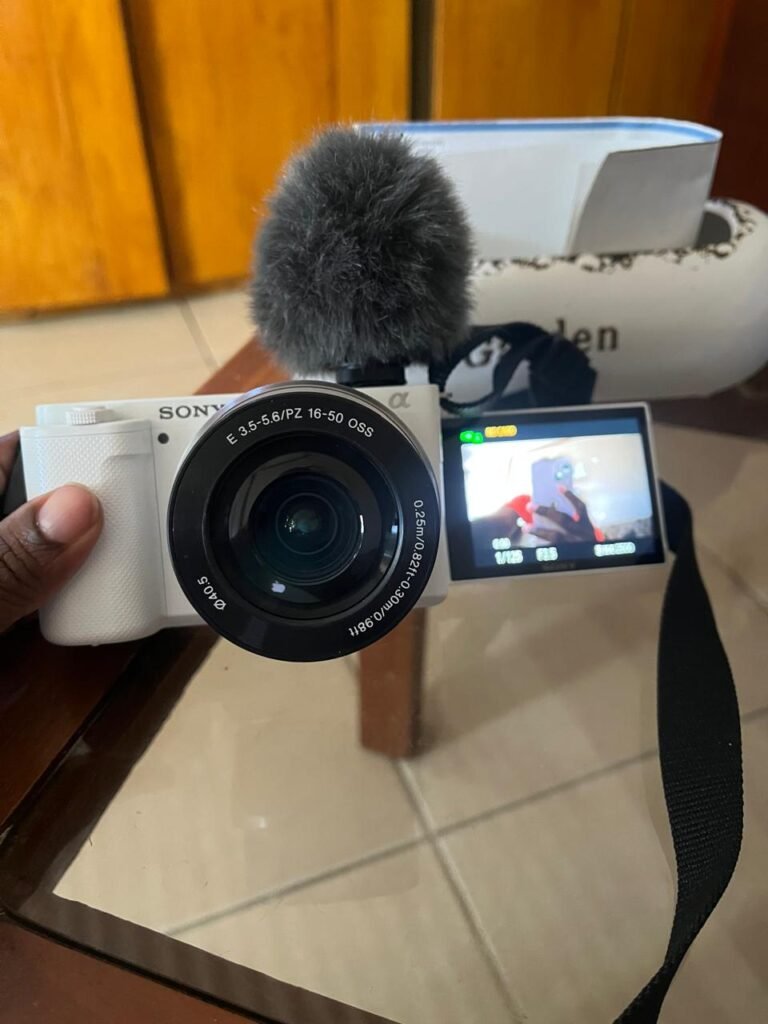
My setup: Sony ZV-E10 body + 16-50mm kit lens + Sony ECM external mic + extra batteries (non-negotiable)
What Makes the ZV-E10 Special in 2026
The ZV-E10 isn’t the newest camera on the market, but it carved out a specific niche: a large APS-C sensor mirrorless camera built specifically for content creators, not photographers. Here’s what that actually means:
The Flip Screen That Faces You: This seems basic, but it’s game-changing. You can monitor your framing, check if you’re in focus, and adjust on the fly without guesswork. No more recording an entire video only to discover you were half out of frame.
Background Defocus Button: One press blurs your background professionally. Another press brings everything into sharp focus. No menu diving, no confusion—just the look you want, instantly.
Face-Tracking That Actually Works: The precision here surprised me. The camera locks onto your face and follows you around the frame. Product showcase mode is excellent for reviews—hold up a product, and the camera instantly refocuses from your face to the item without manual adjustments.
The Wins
Entry Into Interchangeable Lens Systems: This is your gateway drug to the Sony E-mount ecosystem. Start with the kit lens, then upgrade to primes, zooms, or cinematic glass as your skills and needs grow. That flexibility is the ZV-E10’s superpower.
4K Quality Without Cinematic Bokeh Obsession: The kit 16-50mm lens delivers clean, sharp 4K footage. Yes, you’re trading extreme background blur for versatility and affordability. For most content creators starting out, this is the right trade-off.
Dedicated Equipment = Dedicated Workflow: When your phone isn’t your camera, you can:
- Stay connected without airplane mode
- Avoid filling phone storage with massive video files
- Maintain battery life for actual phone tasks
- Keep your creative gear separate from communication tools
Amazing Photo Quality: This often gets overlooked in video-focused reviews, but the ZV-E10’s APS-C sensor produces excellent stills. If you need thumbnails, behind-the-scenes shots, or product photography, this camera handles it beautifully.
Audio Flexibility: The built-in mic is decent, but pair it with the Sony ECM external shotgun mic (which I use), and your audio quality jumps significantly. The camera also supports wireless mic systems if you need even more flexibility.
The Trade-Offs
Battery Life Woes: This is the ZV-E10’s biggest weakness. Battery life is short—expect 45-60 minutes of actual recording time per battery. My solutions:
- For short-form content: One battery is usually enough for batching content
- For long-form content: Buy at least 2-3 extra batteries, or keep the camera plugged in while filming (USB-C power delivery works)
- Budget an extra $50-100 for batteries. Non-negotiable.
No Touchscreen: In 2026, this feels dated. You can’t tap to focus or navigate menus by touch. You’ll use physical buttons and dials. Is this a dealbreaker? No. Is it annoying, since it’s available on the Sony EV-10 II and other cameras on the market.
Portability vs. Convenience: The ZV-E10 is portable for a mirrorless camera, but it’s not pocket-sized like a phone or DJI Osmo. If ultra-portability is your priority, try the Dji Osmo Pocket 3 or the Dji Nano.
Kit Lens Limitations: The 16-50mm is great for getting started, but if you want that dreamy bokeh and the wide angles everyone talks about, you’ll need to invest in faster lenses (like a 50mm f/1.8). Budget accordingly.
Current Pricing & Alternatives (2026)
Sony ZV-E10 (with 16-50mm kit lens): listed as $798 on Amazon
The Competition:
DJI Osmo Pocket 3 Combo: Currently listed as $545 on Amazon
- Choose this if: Portability is everything, built-in gimbal matters, you want all-in-one simplicity
- Skip this if: You want interchangeable lenses, larger sensor quality, or manual control.
DJI Osmo Nano (64GB): $299 currently listed on Amazon
DJI Osmo Nano (128GB): $329 listed on Amazon
- Choose this if: Maximum portability, action camera features, modular mounting
- Skip this if: You need the larger sensor, interchangeable lenses, or traditional camera controls
Sony ZV-E10 vs. DJI: Which Should You Choose?
Choose the Sony ZV-E10 if:
- You want to build a lens collection over time
- Manual controls and customization matter
- You’re creating content where sensor size impacts quality (low light, depth of field)
- You don’t mind the reduced portability
- You’re ready to learn real camera fundamentals
- Budget-friendly entry into APS-C mirrorless cameras is your goal
Choose DJI Osmo Pocket 3 if:
- Portability trumps everything
- Built-in gimbal stabilization is essential
- You want grab-and-go simplicity
- Interchangeable lenses sound overwhelming
- Your content is mostly run-and-gun, travel, or vlogging
Choose DJI Osmo Nano if:
- You need the absolute smallest form factor
- Action camera mounting flexibility matters
- You’re filming POV sports content
- Your budget is tightest ($299-329 vs. $765)
The Features That Surprised Me
Product Showcase Mode: I thought this would be gimmicky. It’s not. When reviewing products or demonstrating items, the instant focus shift from face to object is seamless and professional-looking.
Background Defocus Precision: The one-button background blur isn’t just a parlour trick—it genuinely delivers the cinematic look content creators want without fussing with aperture settings.
Face Priority Auto Exposure: Walking from indoors to outdoors while filming? The camera automatically adjusts to keep your face properly exposed. This subtle feature prevents so many blown-out shots. However, the Dji Osmp Pcoket 3 has better video capture quality in low light settings compared to the Sony ZV E-10.
Should You Buy This in 2026?
Yes, if:
- You’re serious about content creation and ready for dedicated equipment
- You want room to grow with better lenses
- Battery management doesn’t scare you off
- You value image quality over maximum portability
No, if:
- You need one-handed, ultra-portable filming
- Battery swapping sounds like a deal-breaker
- You want a touchscreen interface
- Your smartphone already meets your needs
- You can capturing content in constant low light settings
Maybe, if:
- You’re torn between portability and quality (honestly, test both the ZV-E10 and Osmo Pocket 3, if possible)
The Bottom Line
The Sony ZV-E10 isn’t trying to be everything. It’s a budget-friendly gateway into serious content creation with an APS-C sensor and interchangeable lens system. In 2026, it remains relevant because it solves a specific problem: creators who’ve outgrown smartphones but aren’t ready to drop $3,000+ on pro gear.
Yes, the battery life is frustrating. Yes, the lack of touchscreen feels dated. But the image quality, face-tracking precision, and lens ecosystem flexibility make it a compelling choice for creators ready to level up without breaking the bank.
For vertical short-form content and long-form YouTube videos, paired with the Sony ECM mic and a handful of extra batteries, the ZV-E10 delivers professional results at a price point that won’t require selling a kidney.
If reduced portability isn’t a dealbreaker and you’re genuinely ready to carry dedicated camera equipment, this remains one of the best value propositions in content creation cameras.
Ready to start your APS-C mirrorless journey?
Affiliate Disclosure: This post contains affiliate links. If you purchase through these links, I may earn a small commission at no extra cost to you. This helps support the blog and allows me to continue creating helpful tech reviews.